A practical guide to printing industry cleaning: Anilox rollers, ink trays and blades
In the printing industry, it is especially important that cleaning does not only deliver a visible result, but that it can also be technically verified. In the case of an anilox roller, a doctor blade or an ink tray, it is not enough for the component to appear clean from the outside. The real question is whether the surface, the cell structure and the inking system can operate precisely, evenly and reliably again.
Fort Facility’s printing industry cleaning solutions are designed to support this process through the selection of the right technology, precise cleaning and, where required, measurement-based verification.

Why is printing industry cleaning important?
During the printing process, machine components are continuously exposed to inks, varnishes, solvents, adhesives and various coatings. Over time, these materials can build up on the surface of the components, dry into hard-to-reach areas and cause operational or quality-related problems in the long term.
Contaminated components can lead to:
-
uneven ink transfer,
-
colour deviation or unstable print quality,
-
more frequent machine downtime,
-
longer maintenance times,
-
increased ink consumption,
-
more waste,
-
faster wear of components.
The purpose of printing industry cleaning is therefore not simply to remove contamination, but to support the stability of the production process.

Laser cleaning of anilox rollers
The anilox roller is one of the key components in flexographic printing. Its function is to transfer a specific amount of ink evenly during the printing process. The precise cell volume of the tiny ceramic cells on the surface of the roller directly affects ink transfer and, as a result, print quality.
During use, ink, varnish and other contamination residues build up inside the cells. These deposits can clog the cells, reduce the available cell volume and alter the ink transfer capacity of the roller. This may result in colour deviation, coverage issues, streaking or print quality that becomes more difficult to reproduce.
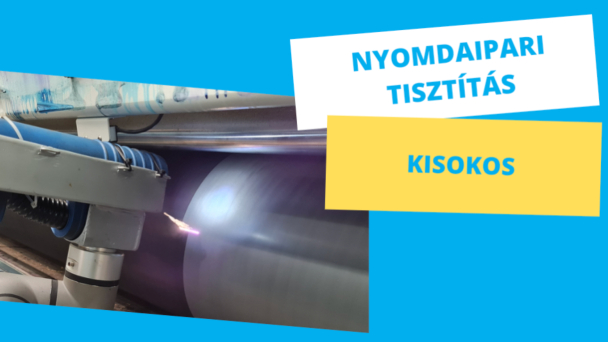
Laser cleaning is a modern, precise and chemical-free process that enables deep yet gentle cleaning of anilox rollers. During the process, dried ink, varnish and other contamination residues can be removed from the ceramic cells without damaging the roller surface or the cell structure, provided that the correct technological settings are used.
As a result of cleaning, the anilox roller can regain its optimal ink transfer capacity, contributing to more stable print quality, more efficient production and reduced operating costs.

Benefits of laser cleaning for anilox rollers
Laser cleaning of anilox rollers can be especially beneficial in printing environments where precise, reproducible print quality and predictable maintenance processes are important.
The benefits of the process include:
-
restoration of the optimal cell volume of the anilox roller,
-
more even and accurate ink transfer,
-
stable, reproducible print quality,
-
reduced ink consumption,
-
less waste,
-
extended service life of anilox rollers,
-
chemical-free, environmentally friendly cleaning technology,
-
gentle preservation of the ceramic surface and cell structure,
-
shorter maintenance time,
-
greater production efficiency.
One of the key advantages of laser cleaning is that it does not only target surface contamination, but is also suitable for removing deposits from inside the anilox cells. This is particularly important when the roller can no longer provide its previous ink transfer performance.

Troica measurement: before and after cleaning
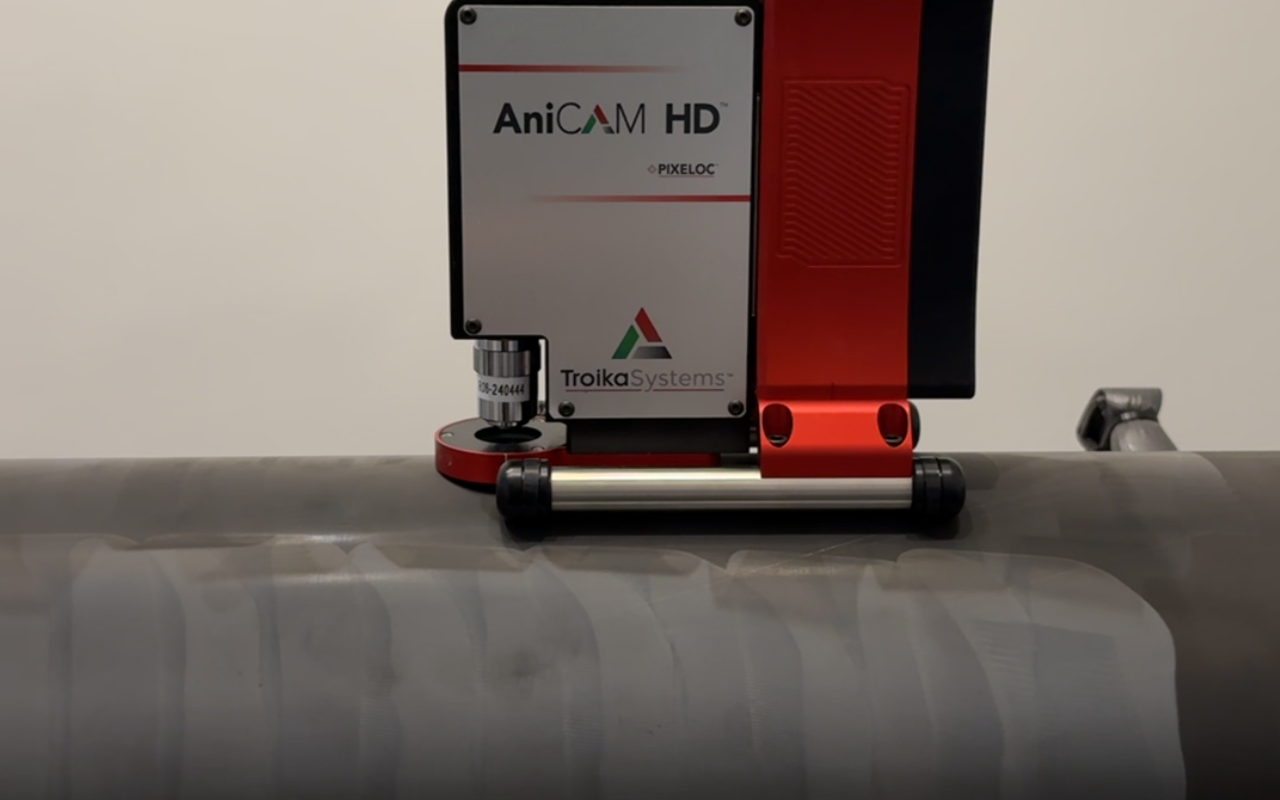
Printing industry cleaning is truly reliable when the result can be verified not only visually, but also through measurement. In the case of anilox rollers, the Troica measuring device plays a particularly important role.
The Troica system can be used to assess the current condition of the anilox roller, the level of cell contamination and the condition of the roller before cleaning. The measurement provides a more accurate picture of whether cleaning is required, the extent of contamination and the overall condition of the roller itself.
After laser cleaning, Troica measurement can also be used for verification. This means it is possible to see not only that the roller has become cleaner, but also to document the result of the cleaning process. This is especially useful for printing companies where quality assurance, traceable maintenance processes and documentation of equipment condition are important.
The measurement can also help determine whether a roller can still be restored through cleaning, or whether wear, damage or cell loss has reached a level where another maintenance decision is required.

Cleaning of doctor blades and ink trays
Another important area of printing industry cleaning is the cleaning of doctor blades, ink trays and other inking system components. Their condition can affect the speed of machine washing, the operation of the inking system and the stability of the printing process.
Regular cleaning of doctor blades and ink trays is essential for fast and thorough machine washing, as well as for the efficient operation of the inking system. Dried ink, varnish and other deposits can make components more difficult to handle, increase maintenance time and negatively affect the condition of the components in the long term.
Fort Facility also performs printing industry component cleaning using laser and sodium bicarbonate cleaning technologies. The appropriate process is always selected based on the type of component, the material, the nature of the contamination and the required level of cleanliness.
With laser and sodium bicarbonate cleaning, stubborn ink, varnish and other deposits can be removed without the use of chemicals. The process is fast and gentle, helps make the cleaning of printing machine rollers easier, can reduce maintenance time and may contribute to extending the service life of the components.
Which cleaning technology is suitable for each printing industry component?
There is no universal solution for every printing industry cleaning task. Different technologies may be ideal for a ceramic anilox roller, an ink tray, a doctor blade or a heavily contaminated machine component.
Several factors must be considered when selecting the right technology:
-
what type of component needs to be cleaned,
-
what material the surface is made of,
-
what type of ink, varnish or adhesive has built up on it,
-
how sensitive the surface is,
-
whether measurement and documented verification are required,
-
whether on-site or off-site cleaning is more suitable,
-
how much maintenance time is available.
In the case of anilox rollers, the combination of laser cleaning and Troica measurement can be especially useful, because the result of the cleaning can be checked instrumentally. For ink trays, doctor blades and other printing industry components, laser or sodium bicarbonate cleaning may be the appropriate choice depending on the type of contamination and the condition of the component.

When is printing industry cleaning worth considering?
Printing industry cleaning may be required when:
-
print quality deteriorates,
-
colour deviation or coverage issues appear,
-
the ink transfer of the anilox roller is no longer even,
-
machine downtime becomes more frequent,
-
the waste rate increases,
-
stubborn deposits appear on ink trays or doctor blades,
-
machine washing takes more and more time,
-
documented condition assessment or post-cleaning verification is required.
Regular and professional cleaning can help ensure that printing machines operate predictably and with stable quality.

Summary
Printing industry cleaning is an important part of production quality, efficiency and maintenance reliability. Laser cleaning of anilox rollers, cleaning of doctor blades and ink trays, and Troica measurement-based verification together provide a complex solution that is not only about removing contamination.
Our goal is to make printing industry cleaning a measurable, verifiable and long-term sustainable process. Whether it is an anilox roller, an ink tray, a doctor blade or another printing industry component, selecting the right cleaning technology always begins with a precise understanding of the task.
Frequently asked questions about printing industry cleaning
How can you tell if an anilox roller needs cleaning?
Signs that cleaning may be required include deteriorating ink transfer, reduced colour stability, a higher waste rate or print quality that requires more adjustments than before. In such cases, it is worth checking the condition of the roller not only visually, but also with instrument-based measurement.
Can laser cleaning be used for every anilox roller?
The right cleaning technology always depends on the condition, type and surface of the roller, as well as the nature of the contamination. This is why assessment before cleaning is important, and, where necessary, Troica measurement can help provide a more accurate picture of the current condition of the roller.
Why is traditional manual cleaning not enough?
In many cases, manual cleaning only removes visible contamination, while ink, varnish or other residues may remain deep inside the anilox cells. Over time, these residues can affect ink transfer and print quality.
How measurable is the result of cleaning?
In the case of anilox rollers, the result of cleaning can be verified with Troica measurement. This makes it possible to compare the condition before and after cleaning, so decisions do not have to be based solely on visual impressions.
Does Fort Facility only clean anilox rollers?
No. Printing industry cleaning can also include the cleaning of doctor blades, ink trays and other inking system components. The condition of these parts can also affect maintenance time, the efficiency of machine washing and the predictability of production.
Is cleaning carried out on site or off site?
This always depends on the task, the type, size and condition of the component, as well as the operating environment. The appropriate solution is determined based on prior consultation and assessment. In most cases, however, on-site cleaning can be arranged.
Printing industry cleaning in Budapest and nationwide
Fort Facility’s printing industry cleaning services are available in Budapest and throughout Hungary. Depending on the nature of the task, cleaning can be carried out after an on-site assessment or by transporting the components to be cleaned.
The goal in every case is for cleaning to deliver not only an aesthetic result, but also real technical value for printing production: more stable operation, improved ink transfer, less waste and more predictable maintenance.
We will respond to your request for a quote within 24 hours, and to your call immediately!
Videos