
FIRE PREVENTION THROUGH CLEANING? How Can Periodic Industrial Cleaning Help Reduce the Risk of Fire Spread?
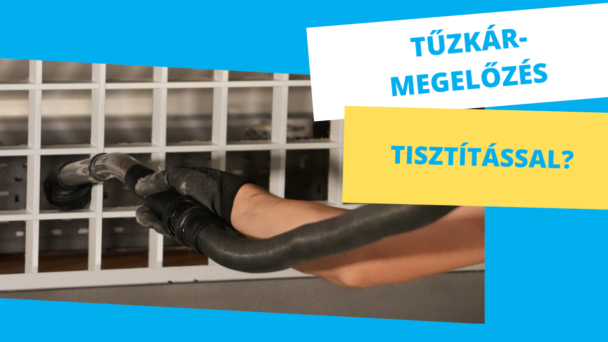
Of course, this does not mean that every fire can be prevented through regular cleaning. A single deep clean cannot eliminate the risks associated with electrical faults, technological failures, open flames, overheating or human error.
However, periodic industrial cleaning can be an important part of a comprehensive fire safety strategy, as it can reduce the amount of combustible material and other deposits that may contribute to the spread of fire.
Guidance from the UK Health and Safety Executive (HSE) also highlights the importance of good housekeeping and specifically recommends preventing the accumulation of waste, dust and grease, as these materials may cause a fire or worsen its consequences.
What Does Cleaning Have to Do with the Spread of Fire?
For a fire to develop, three elements are required: combustible material, oxygen and a suitable ignition source. Industrial cleaning primarily allows us to influence the first of these by removing or reducing combustible contaminants that have accumulated in the working environment.
In an industrial facility, these deposits are not necessarily found only where they are immediately visible.
Dust, oily deposits and production residues can accumulate on:
-
machinery and production equipment,
-
supporting structures and beams,
-
pipework and around cable trays,
-
cranes and crane tracks,
-
around ventilation and air-handling equipment,
-
on top of suspended ceilings and elevated surfaces,
-
and in other hard-to-reach areas that are often excluded from routine daily cleaning.
This is why a visibly clean floor does not necessarily mean that the entire industrial facility is clean.
In addition to regular cleaning, OSHA guidance on combustible dust specifically addresses the cleaning of beams, conduits, pipes, covers and other horizontal surfaces, as well as the inspection of concealed dust accumulation.
Dust Is Not the Only Potential Problem
The type of contamination can vary significantly depending on the industry and production technology.
Dust
Dust is perhaps the most obvious example, but it is important to note that not all industrial dust is combustible or explosive.
However, certain finely divided materials, including some wood, paper, textile, food, plastic and metal dusts, can form combustible dust clouds when present at sufficient concentrations and exposed to an ignition source.
The risk may increase further if dust that has previously settled on structures and machinery becomes airborne again during an incident. For this reason, OSHA considers the regular removal of surface deposits an important preventive measure alongside reducing dust generation itself.
Oil and Grease
Oily and greasy deposits can develop on machinery, production equipment, structural elements and floors.
As part of good housekeeping practice, the HSE specifically highlights the importance of preventing grease accumulation. In certain working environments, this is therefore more than simply a matter of cleanliness or maintenance.
Production Waste and Solid Debris
Paper, cardboard, plastic, textiles, wood shavings, rubber residues, packaging materials and other production by-products may accumulate around machinery or in hard-to-reach locations.
Their regular removal may sound straightforward, but in a large industrial facility, concealed and elevated areas are often the very places that can remain outside the scope of daily cleaning for extended periods.
Cobwebs
Cobwebs themselves are generally not a primary industrial fire safety concern. However, they can collect dust, lightweight particles and other contaminants, while also serving as a useful indication that an elevated area has not been thoroughly cleaned for some time.
How Do We Clean an Industrial Facility?
At Fort, we carry out periodic, comprehensive cleaning of industrial halls, factories and production facilities.
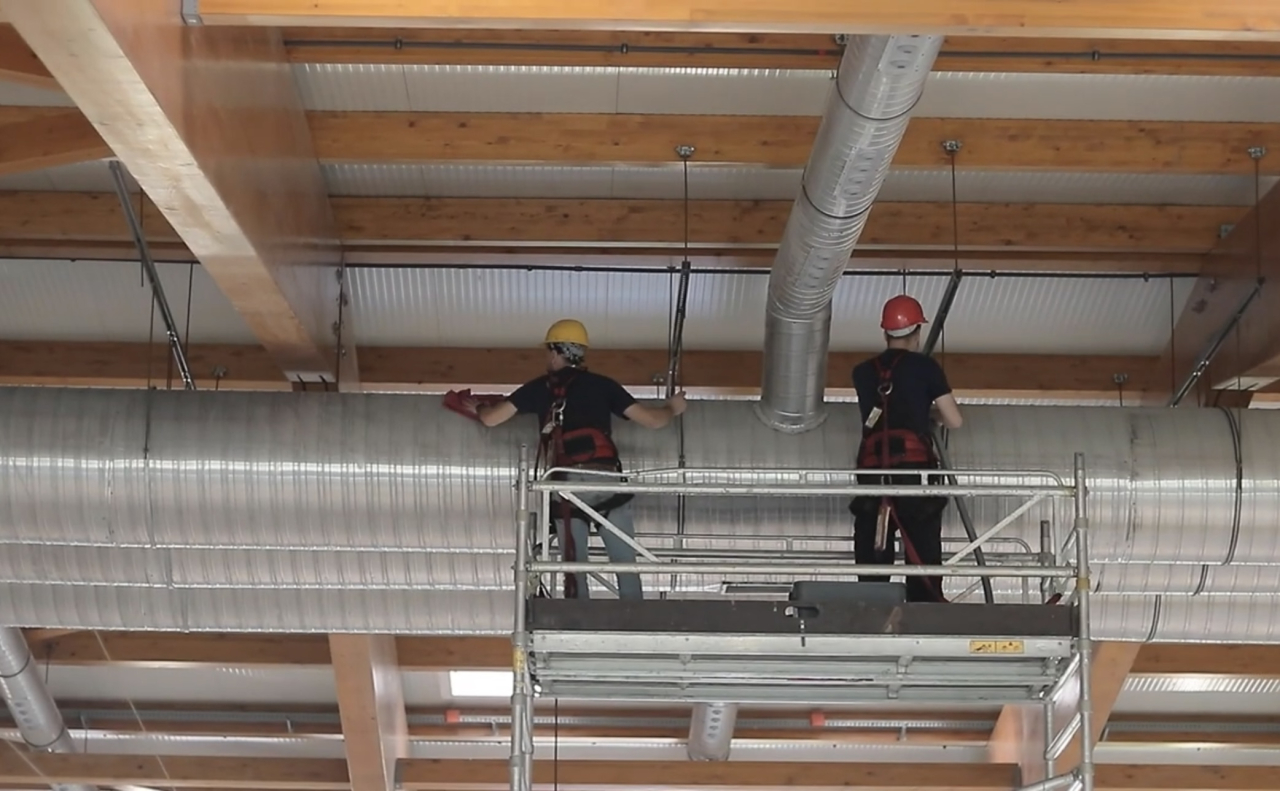
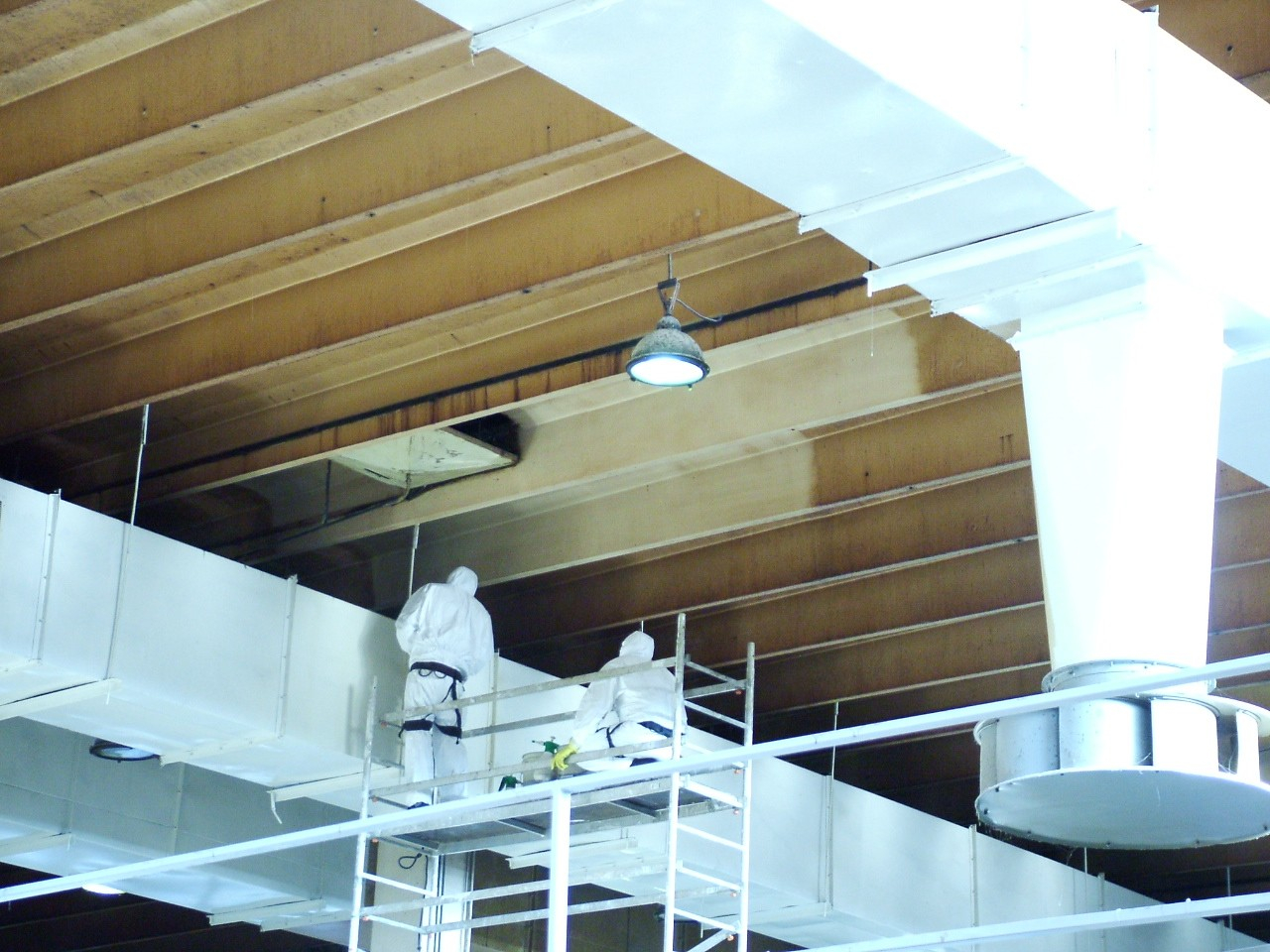
This involves much more than cleaning floors. Depending on the requirements of the site, the work may also include building structures, machinery and production equipment, cranes and crane tracks, elevated surfaces, building services, suspended ceilings and other areas that are difficult or impossible to reach during routine daily cleaning.
We always select the appropriate technology based on the type of contamination, substrate, accessibility and operating environment. When cleaning machinery and equipment, Fort deals with a wide range of industrial contaminants, including dust, oil, tar, plastic and rubber residues, paint, resin, lacquer and other deposits.
Industrial Dust Removal and Dust Extraction
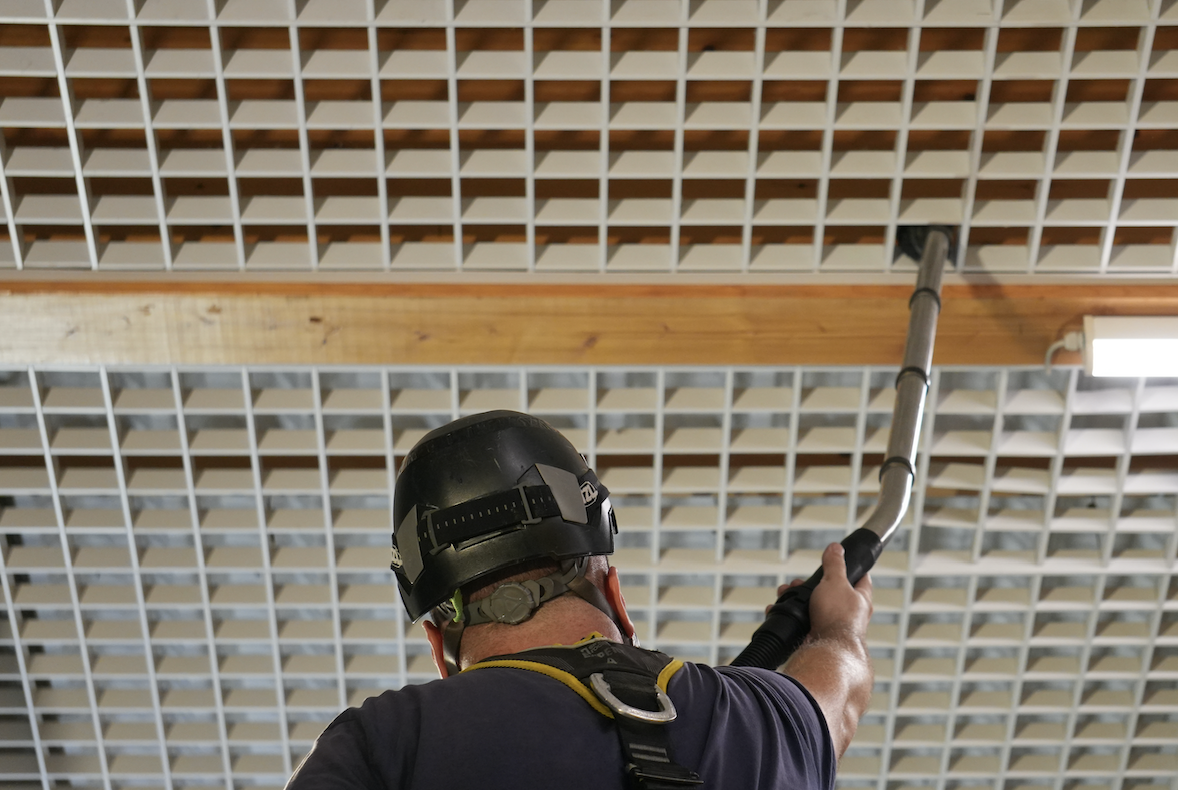
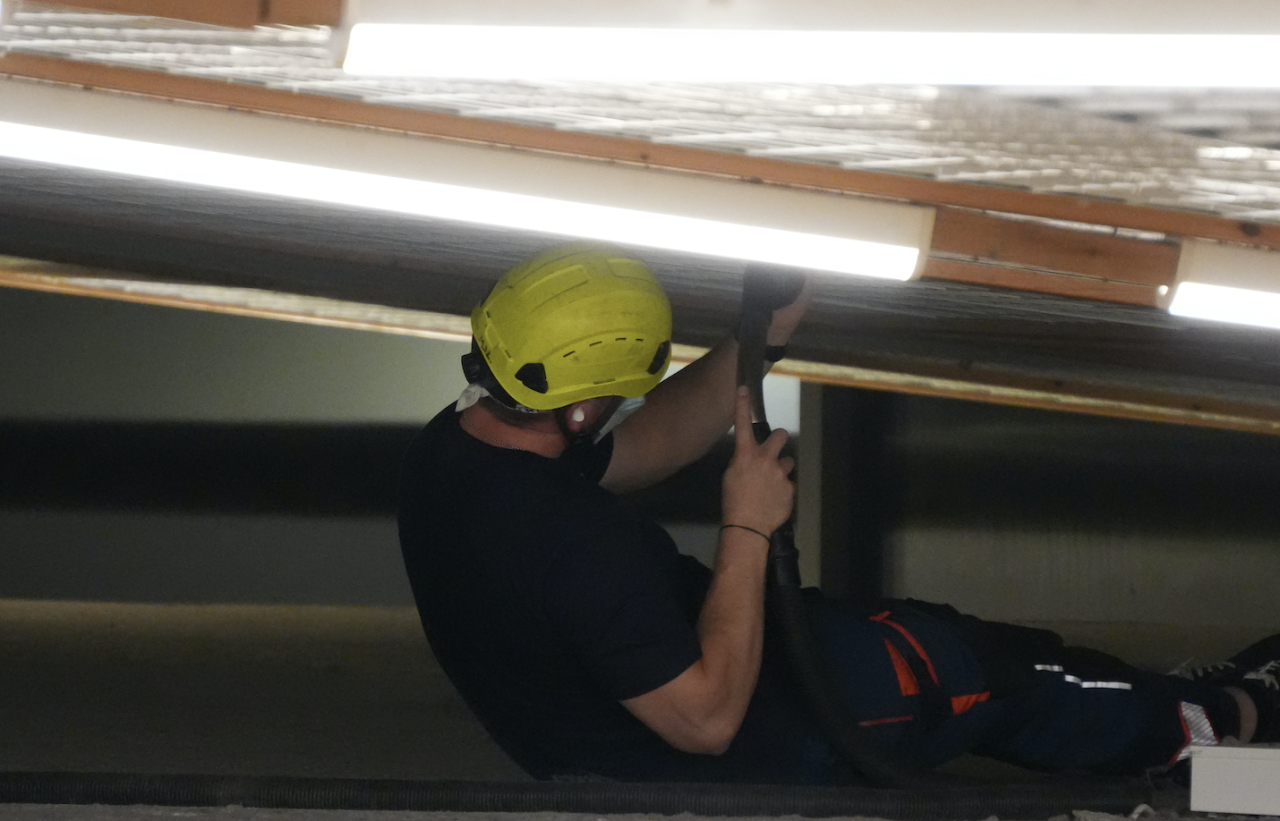
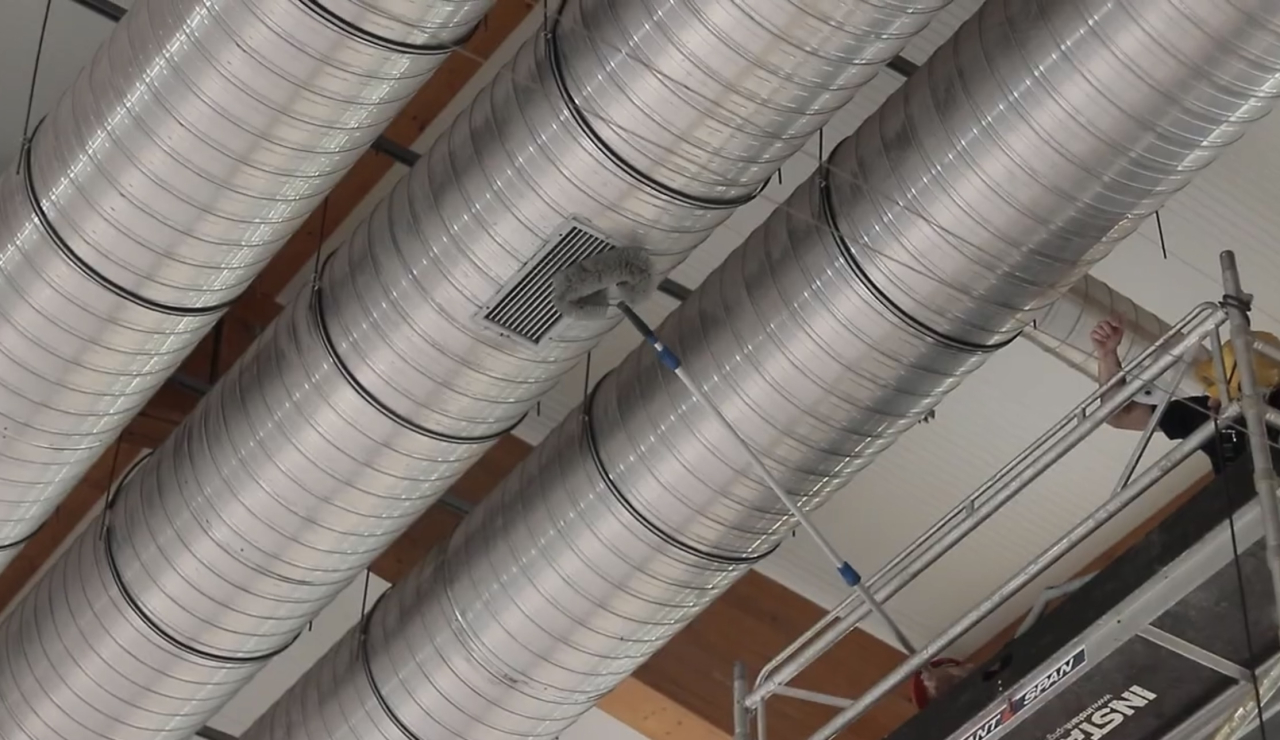
We remove dust accumulated on industrial structures, machinery and elevated surfaces using manual and mechanical methods, as well as dust extraction technology.
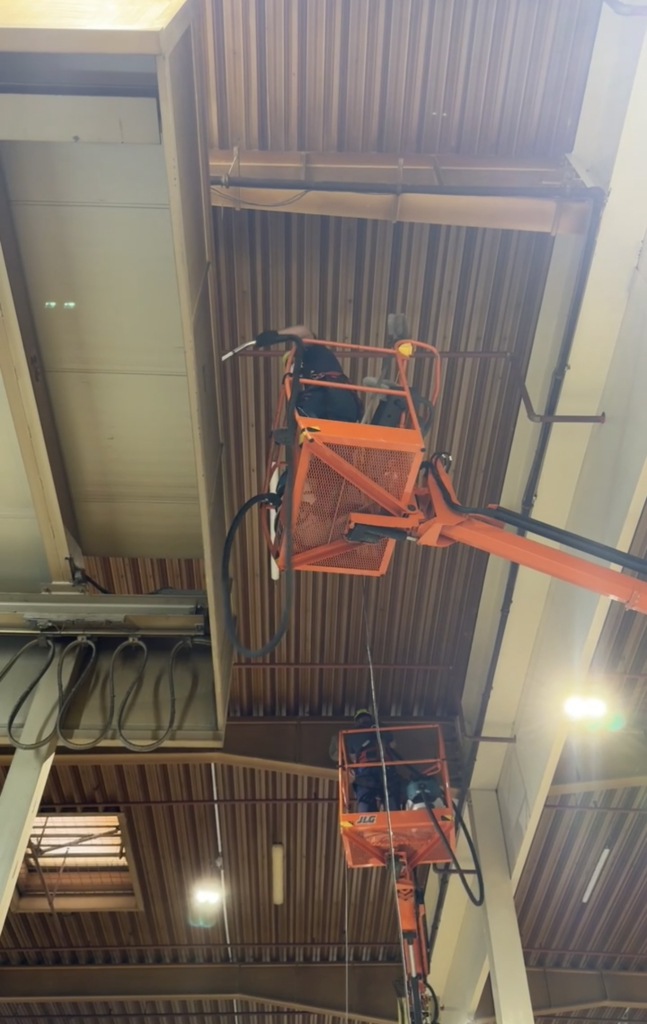
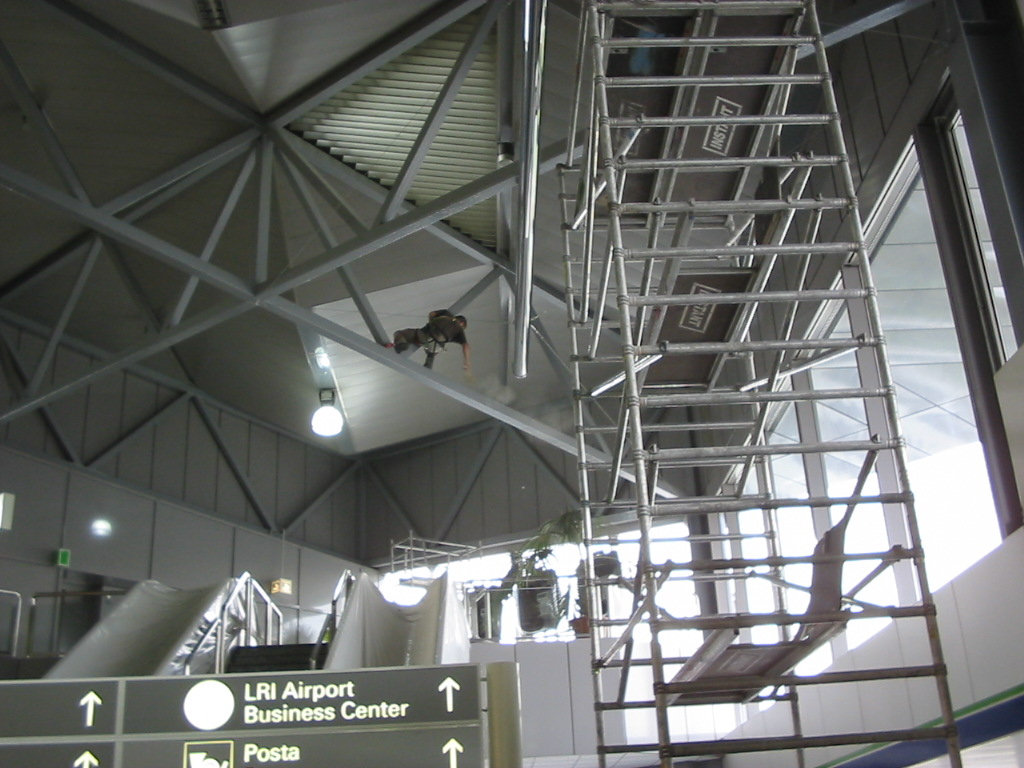
Where necessary, we access surfaces that cannot be reached during conventional daily cleaning using scaffolding, lifting equipment or industrial rope access.
When potentially combustible dust is present, selecting the correct cleaning method is particularly important. Simply blowing deposits away with compressed air, for example, can disperse settled dust into the atmosphere. In such environments, the working method must therefore always be adapted to the specific risks of the site.
OSHA also recommends cleaning methods that avoid creating hazardous dust clouds.
Chemical and High-Pressure Cleaning
For oily, greasy and other stubborn industrial deposits, chemical cleaning or high-pressure water cleaning may be used depending on the surface.
These methods can be particularly effective on floors, structural elements and other suitably resistant industrial surfaces.
Dry Ice Cleaning
For machinery, production equipment and complex components, we also use dry ice cleaning technology.
One of its advantages is that the cleaning medium sublimates during the process, meaning that no secondary blasting media remain after cleaning.
However, in environments where there is a potential combustible dust or dust explosion hazard, dry ice cleaning is not automatically the appropriate solution. Its suitability must always be determined according to the specific operating environment.
Laser Cleaning
For localised, strongly bonded contamination such as oil, grease, paint, rust or oxide layers, laser cleaning is also available.
However, laser cleaning is not a general dust removal method for industrial halls. Because the technology uses concentrated energy, its application must always be adapted to the safety requirements of the specific task and environment.
There is therefore no single universal “fire prevention cleaning technology.” In an industrial facility, the key is to match the correct cleaning method to the contamination found in each area.
How Often Should an Industrial Facility Be Cleaned?
There is no single rule that applies to every facility.
A low-dust assembly plant may require a completely different cleaning cycle from a wood, paper, textile or food processing facility, or from an industrial environment where oil, metal shavings or large quantities of fine dust are regularly generated.
When determining the appropriate cleaning frequency, it is worth considering:
-
how quickly contamination accumulates again,
-
what type of material is involved,
-
whether the dust or waste generated is combustible,
-
where and in what quantity it accumulates,
-
whether there are hard-to-reach areas,
-
and how intensive the production process is.
International occupational safety guidance therefore supports the use of a predefined cleaning programme tailored to the specific working environment, including both the cleaning method and the required frequency.
OSHA specifically emphasises that cleaning frequency should be determined according to the rate of dust accumulation and the level of risk. The effectiveness of the cleaning programme and any concealed deposits should also be reviewed periodically.
The key point is therefore not that an industrial facility should be deep-cleaned “once a year”, but rather that contamination should not be allowed to accumulate to hazardous levels.
What Happens if a Fire Does Occur?
Periodic industrial cleaning can reduce certain risks, but naturally it cannot prevent every fire.
If a fire has already occurred, the correct cleaning technology once again becomes an important part of the recovery process.
Fort also provides post-fire cleaning services.
Depending on the requirements of the site, we can carry out the sorting and removal of damaged items, clean salvageable assets, inspect plaster loosened by heat exposure, remove soot from surfaces and deodorise affected areas.
Depending on the substrate, we use blasting and chemical cleaning technologies for soot removal.
Regular cleaning also offers another practical advantage from a recovery perspective: in a properly maintained and periodically cleaned industrial environment, post-fire restoration does not have to begin with years of accumulated dust, oil, grease and production residues already present on the surfaces.
FAQ
How Can You Tell When Periodic Deep Cleaning Is Necessary in an Industrial Facility?
Warning signs may include visible dust layers on structures and machinery, cobwebs at height, increasing oily or greasy deposits, production waste accumulating beneath and around machinery, or areas that have been excluded from routine cleaning for extended periods.
Can Industrial Deep Cleaning Be Carried Out While the Facility Is Operating?
In many cases, yes. We adapt the cleaning process to the facility's operations, production schedule and the safety requirements of the specific area.
However, cleaning certain equipment or hazardous areas may require partial or complete shutdown.
Is It Enough to Clean Only the Floors and Machinery?
No. Elevated horizontal surfaces, beams, building structures, cranes, crane tracks, pipework and other less frequently accessed areas are also important, as significant quantities of contamination may accumulate on them over time.
Does Fort Provide Industrial Facility Cleaning Nationwide?
Yes. We provide periodic cleaning, dust removal, machinery and equipment cleaning, and specialised surface cleaning services for industrial halls, factories and production facilities in Budapest and throughout Hungary.
Cleanliness Is Part of Industrial Safety
The cleanliness of an industrial facility is not merely an aesthetic consideration.
Regularly removing dust, oil, grease, waste and other production residues means less accumulated contamination on machinery, floors and structural elements. In certain industrial environments, this can also contribute to reducing the risk of a fire starting or spreading.
At Fort, we treat the industrial facility as a complete system when planning cleaning work: from floors and machinery to crane tracks and elevated structural elements.
From our available dust removal, high-pressure water, chemical, dry ice, abrasive blasting and laser cleaning technologies, we select the most appropriate solution for each individual task.
Looking for a solution for the periodic cleaning of an industrial hall, factory or production facility?
Contact us. Based on the site, surfaces and types of contamination, we can help determine the most suitable cleaning technology for the task.
Our services are available in Budapest and throughout Hungary.
Request a quotation or contact us by clicking the button.
Sources
OSHA – Occupational Safety and Health Administration
Hazard Communication Guidance for Combustible Dusts; Preventing and Mitigating the Effects of Fire and Explosions; OSHA Technical Manual – Combustible Dust / Housekeeping.
OSHA guidance highlights the importance of preventing combustible dust accumulation, maintaining a regular housekeeping programme, checking for concealed dust deposits, and using cleaning methods that do not create hazardous dust clouds.
HSE – Health and Safety Executive, United Kingdom
About Dangerous Substances; Introduction to Fire Safety.
The HSE recommends good housekeeping as part of reducing workplace fire and explosion risks, with particular emphasis on preventing the accumulation of waste, dust and grease.
CCOHS – Canadian Centre for Occupational Health and Safety
Combustible Dusts.
CCOHS guidance addresses the formation of combustible dust, common areas of accumulation, the risk of secondary dust explosions and the importance of safe industrial cleaning practices.
Videos

