The ultimate guide to facade cleaning
There is no single facade cleaning technology that works equally well on every surface and every type of contamination. A modern glass facade, a metal cladding system, a brick wall, a natural stone surface or the sensitive facade of a historic building all require different approaches.
In this guide, we explain the most common types of facade contamination, the technologies that can be used to remove them, and how we select the most suitable cleaning method for each task.
What types of contamination can appear on a facade?
Outdoor surfaces naturally accumulate different types of deposits over time. In busy urban environments, dust and traffic-related pollution can be significant, while shaded or damp surfaces are more prone to algae, moss and other organic growth.
Common types of facade contamination include:
- dust and general environmental pollution,
- traffic-related deposits,
- bird droppings,
- algae and moss,
- soot and carbon-based contamination,
- oily or greasy deposits,
- paint and coating residues,
- graffiti,
- construction or renovation residues.
In addition to the type of contamination, the material of the facade itself also determines which cleaning method can be used safely.
Not every facade can be cleaned in the same way
Glass, metal, natural stone, artificial stone, brick, concrete, render or ceramic surfaces all react differently to water, pressure, chemicals and mechanical impact.
Even two surfaces made from the same material can behave very differently. A new brick facade in good condition and a porous brick surface that has been exposed to weather for decades, for example, may require completely different cleaning parameters.
The best technology is therefore not the one that cleans most aggressively, but the one that removes the contamination without placing unnecessary stress on the original surface.
This is particularly important when working on sensitive, older or historic facades.
What technologies can be used for facade cleaning?
A dusty glass facade and a brick wall covered in paint are two entirely different cleaning tasks. This is why we work with a range of technologies, from purified water and high-pressure cleaning to abrasive blasting, laser cleaning and dry ice blasting.
Purified water facade cleaning
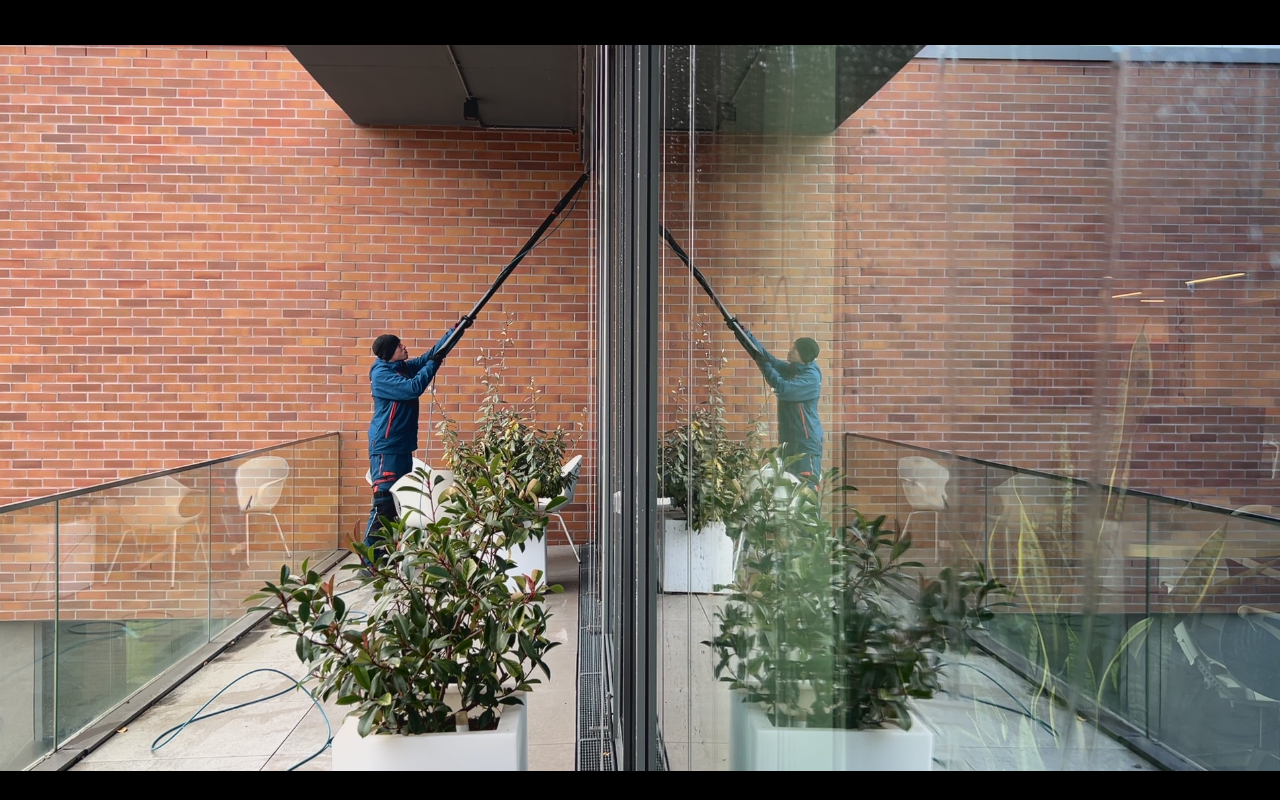
Purified water cleaning is primarily suitable for the maintenance cleaning of glass, metal and other compatible facade surfaces.
Using reverse osmosis, minerals and other dissolved substances are removed from the water. The purified water can then be used to clean the surface without chemicals and can dry without leaving mineral spots or streaks.
With the Fort Facility purified water system, work can be carried out from ground level using carbon fibre poles and brushes at heights of up to 16 metres.
The technology is particularly suitable for removing:
- dust,
- general environmental contamination,
- bird droppings
from glass and other washable facade surfaces.
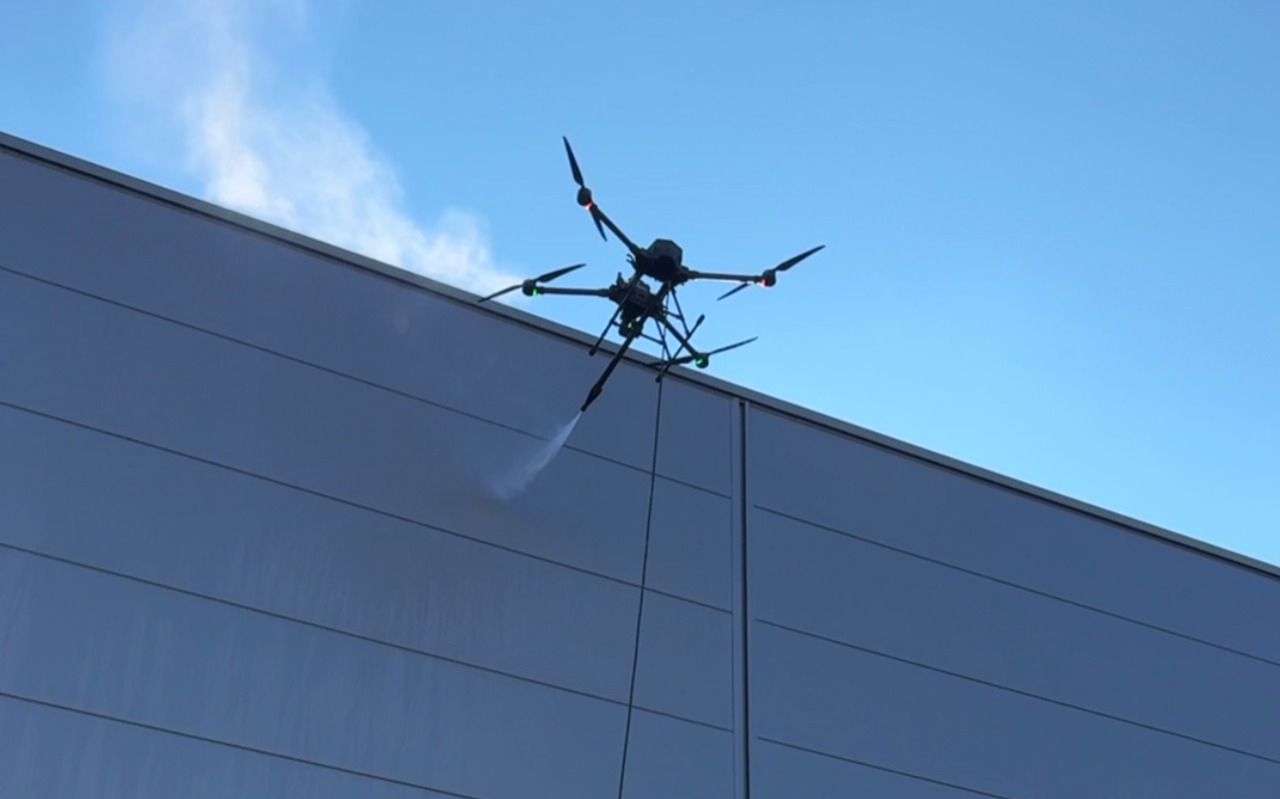
DROZMÓ: drone facade cleaning at heights of up to 50 metres
On high-rise buildings, cleaning is only one part of the challenge. Safely reaching the facade can be just as important.
Fort Facility's DROZMÓ system combines purified water technology, high-pressure water delivery and drone technology.
Drone-based cleaning is used above 16 metres and can operate at heights of up to 50 metres. At these heights, the system can deliver water at pressures of up to 200 bar and a flow rate of 15 litres per minute. The actual cleaning parameters are always adjusted to the specific surface.
DROZMÓ can be used on, among others:
- glass facades,
- metal facades,
- stone cladding,
- mixed-material facades,
- tall and complex building structures,
- hard-to-access exterior surfaces.
One of the main advantages of DROZMÓ lies in access. It can make cleaning possible on facades where aerial work platforms, scaffolding or rope access would otherwise be required.
Cleaning is carried out using purified water, meaning that for suitable types of contamination it allows chemical-free operation.
However, drone cleaning is not a universal solution either. Heavily baked-on, oily, greasy or specialised industrial contamination may require a different cleaning technology.
High-pressure facade cleaning
High-pressure cleaning is not simply a matter of increasing the pressure until the dirt disappears. Achieving the right result requires the water pressure, flow rate, nozzle and working distance to be adjusted to the specific facade.
The final result is influenced by several parameters:
- water pressure,
- flow rate,
- nozzle selection,
- working distance,
- cleaning speed.
Fort Facility's high-pressure cleaning technology can be used on surfaces including stone, concrete, brick and metal. In addition to environmental contamination, it may also be suitable for removing certain paint residues and oily or greasy deposits.
On porous, damaged or sensitive facades, however, the correct settings are particularly important.
Excessive pressure on a sensitive facade does not result in better cleaning. It may damage the surface instead. The goal is to find the setting that removes the contamination while leaving the substrate intact.
Cleaning algae and moss from facades
Algae, moss and other organic contamination frequently develop on facades in damp or shaded areas.
In some cases, mechanical or water-based cleaning alone may not be sufficient. A dedicated facade cleaning agent may then be required.
When selecting the appropriate chemical, several factors must be considered:
- the facade material,
- the type of contamination,
- surrounding surfaces and vegetation,
- the required contact time.
Cleaning agents should only be introduced into the process when the contamination actually requires them. If the same result can be achieved using water or another chemical-free technology, there is no reason to use additional chemicals unnecessarily.
Abrasive blasting on facade surfaces
Abrasive blasting may be considered for stubborn paint, coatings, heavy deposits or certain older stone, concrete and brick surfaces.
The cleaning effect is created by the kinetic energy of the blasting media directed onto the surface.
The result is influenced not only by pressure but also by the type and particle size of the selected blasting medium.
Depending on the task, possible media include:
- sodium bicarbonate,
- granite grit,
- aluminium silicate,
- walnut shell,
- glass beads.
Finer media can provide gentler cleaning, while more aggressive materials create a stronger surface effect.
On facades, test cleaning is particularly important because an overly aggressive blasting medium or incorrect setting can alter the texture and appearance of the original surface.
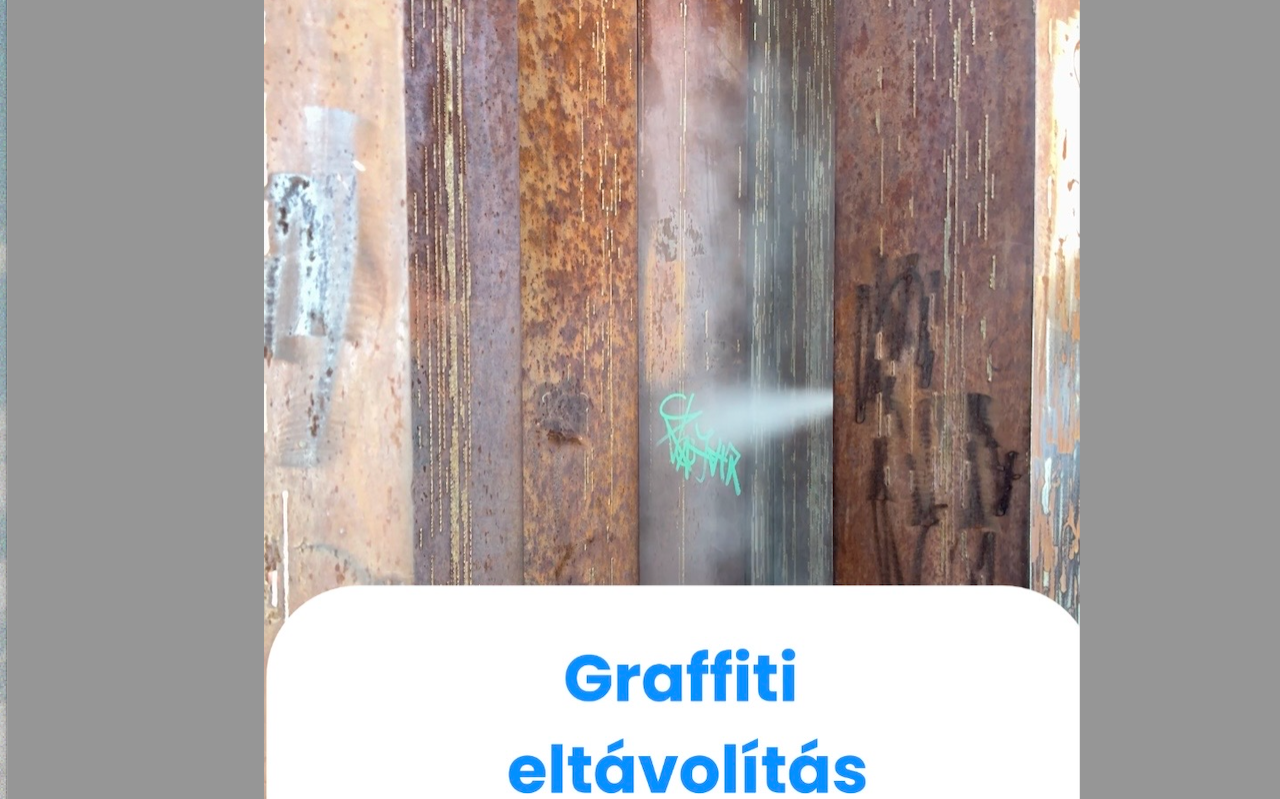
Removing graffiti from facades
When removing graffiti, it is not enough to know what type of paint needs to be removed. It is just as important to know what lies underneath it. The same paint may require a completely different cleaning method on glass, metal, brick or natural stone.
Depending on the task, several technologies may be considered:
- specialised graffiti remover,
- abrasive blasting,
- dry ice blasting,
- laser cleaning.
On porous stone and brick surfaces, protecting the substrate is particularly important. If the cleaning method is too aggressive, the graffiti may disappear while the treated area is left with a visibly different colour or texture from the surrounding surface.
For this reason, it is often advisable to determine the appropriate method on a smaller test area first.
Laser and dry ice cleaning for specialised tasks
Facade cleaning does not always mean washing hundreds of square metres of surface.
Sometimes only one stubborn contaminant or a sensitive architectural detail needs to be treated.
Decorative elements, architectural details, localised paint residues and other specialised contaminants may require a more precisely controlled cleaning technology.
Laser cleaning
Laser cleaning is a chemical-free process in which laser energy is used to separate contamination from the substrate.
Fort Facility works with a mobile 1000 W fibre laser, meaning the technology can also be used for on-site cleaning tasks.
It can be particularly useful for specialised applications where precise control over the cleaning process is important.
Dry ice blasting
During dry ice blasting, the blasting medium sublimates after impact, meaning that no secondary blasting material remains on the work area.
For facade applications, it is mainly considered for specialised tasks or types of contamination where the properties of the technology offer a clear advantage.
Cleaning historic and sensitive facades
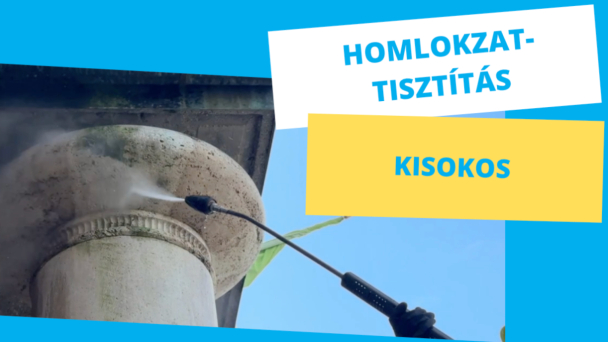
When cleaning an old or historic facade, the aim is not to erase every sign of age. The contamination should be removed while preserving as much of the original material and character of the surface as possible.
On natural stone, old brick, terracotta, decorative elements and other sensitive architectural surfaces, an overly aggressive cleaning method may remove part of the substrate together with the contamination.
For this reason, these projects require particular attention to:
- assessing the condition of the surface,
- identifying the contamination,
- selecting the appropriate technology and parameters,
- carrying out test cleaning where necessary.
A successful result should therefore not be measured simply by how much lighter the facade becomes, but by whether the deposits have been removed without damaging the original surface.
High facades: how do we reach the surface?
Alongside the cleaning technology itself, access to the building also plays a major role in determining how the work is carried out.
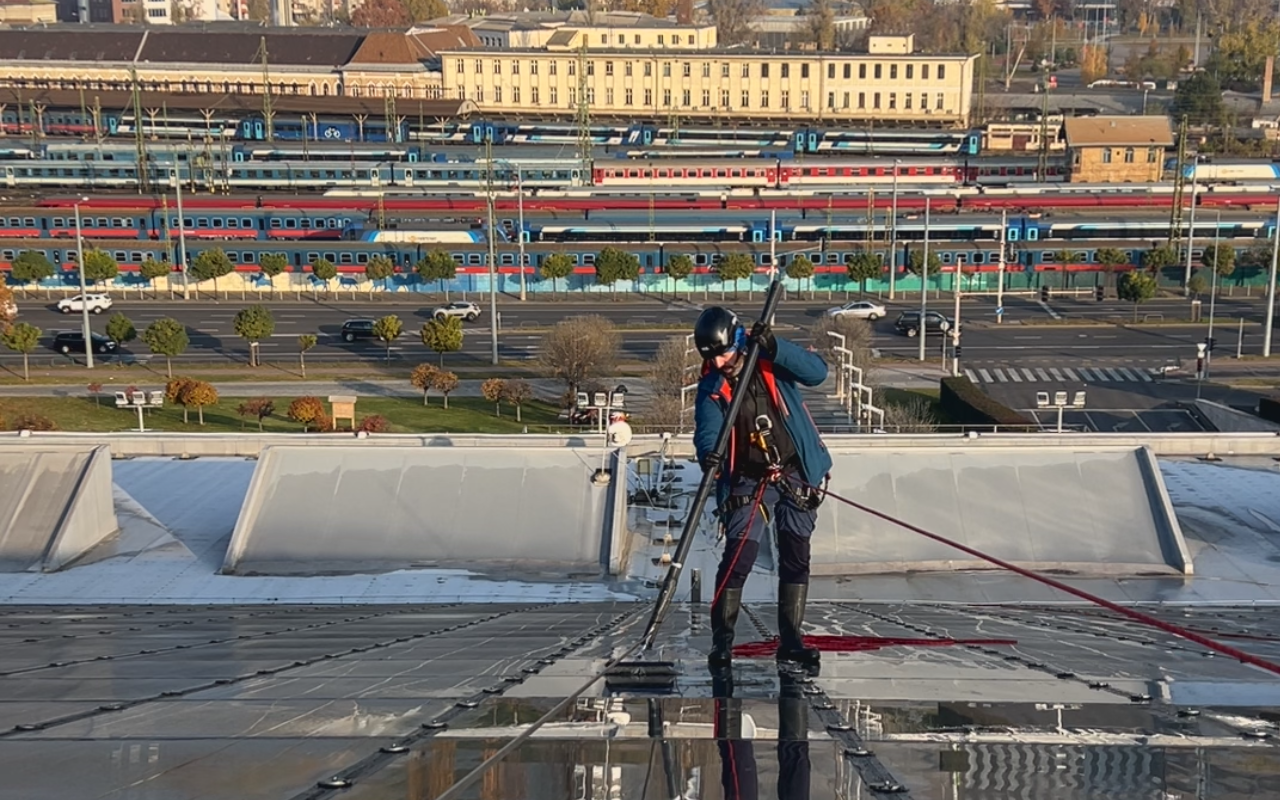
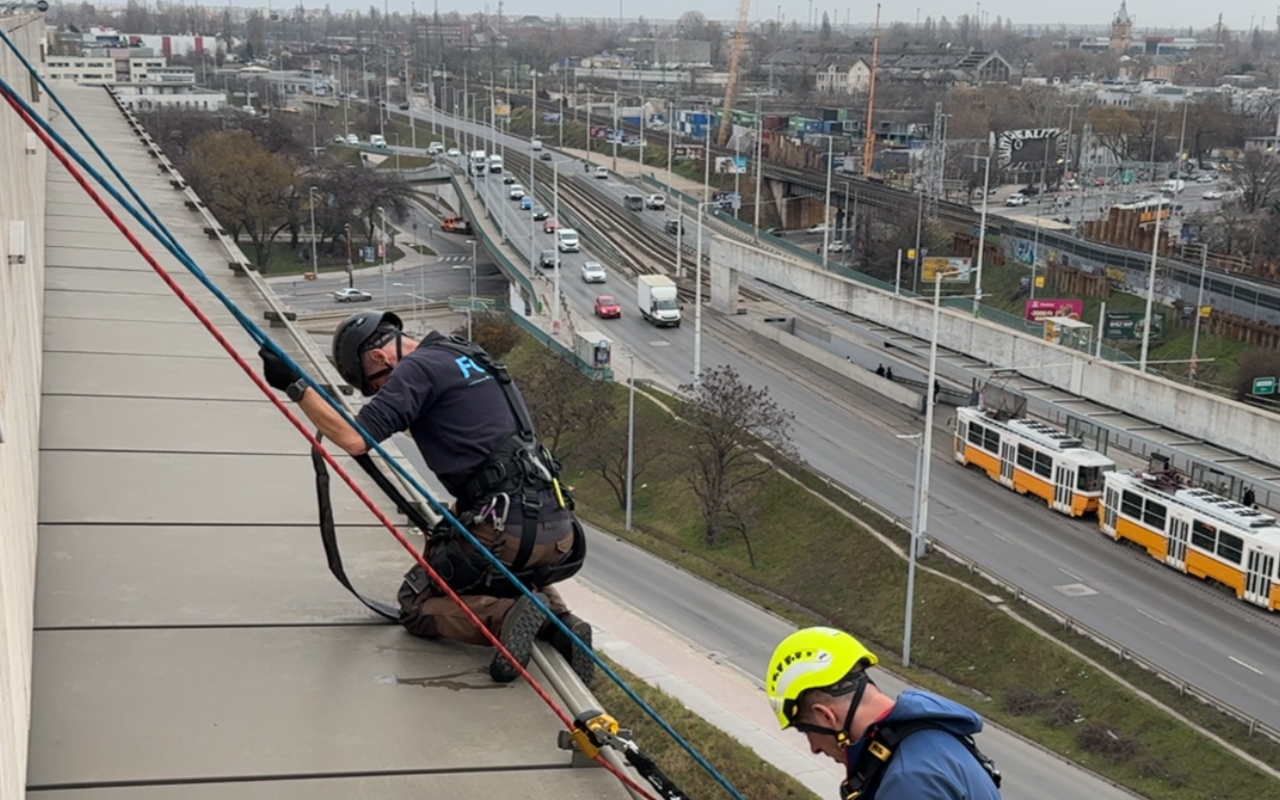
Depending on the structure of the building, facade cleaning may be performed using:
- telescopic carbon fibre systems from ground level,
- drones,
- aerial work platforms,
- scaffolding,
- industrial rope access.
With Fort Facility's purified water system, we can work from ground level at heights of up to 16 metres, while DROZMÓ drone technology can be used above 16 metres at heights of up to 50 metres.
The selected access method can have a significant impact on the speed of the work, the amount of preparation required, the size of the area that needs to be closed off and the overall cost of the project.
Why is test cleaning important?
A photograph can reveal a great deal about the contamination, but it does not always show how the underlying surface will react to cleaning. For this reason, on more complex or sensitive projects, a test clean can be used to verify the selected technology.
On a smaller test area, we can determine:
- whether the contamination can be removed,
- what result can be achieved,
- whether the colour or texture of the substrate changes,
- which parameters should be used,
- whether another technology is required.
This allows the most suitable technology and settings to be determined before the full surface is treated.
How often should a facade be cleaned?
There is no single cleaning interval that applies to every building.
The rate at which a facade becomes contaminated depends on factors including:
- the building's location,
- surrounding traffic,
- facade orientation,
- shade and moisture,
- the material and texture of the surface,
- surrounding vegetation,
- the function of the building.
A glass facade next to a busy road, for example, may require a completely different maintenance schedule from a building in a less polluted environment.
The longer contamination remains on a facade, the more difficult it may become to remove. Regularly maintained surfaces can therefore often be cleaned using simpler and less intensive methods.
Frequently Asked Questions About Facade Cleaning
What types of facades can be cleaned?
Glass, metal, stone, concrete, brick and various mixed-material facade surfaces can all be cleaned. The appropriate technology always depends on the material and condition of the substrate.
Can facades be cleaned without chemicals?
Yes. Chemical-free facade cleaning can be carried out using purified water, DROZMÓ technology, high-pressure water and, in certain specialised applications, laser cleaning, dry ice blasting or abrasive blasting. However, not every type of contamination can be removed effectively without chemicals.
Can high-pressure water damage a facade?
Yes, if it is used incorrectly. This is why water pressure, flow rate, nozzle selection and working distance must always be adjusted to the surface being cleaned.
Can the facades of high-rise buildings also be cleaned?
Yes. Depending on the site, telescopic systems, drones, aerial work platforms, scaffolding or industrial rope access can be used. Fort Facility's DROZMÓ system enables drone facade cleaning at heights of up to 50 metres.
Can graffiti be removed from a facade?
Yes. The appropriate technology must be selected according to both the substrate and the type of paint used. Specialised chemical removal, abrasive blasting, dry ice blasting or laser cleaning may all be considered.
Can the facade of a historic building be cleaned?
Yes, but sensitive and historic surfaces require particularly careful condition assessment and the selection of a controllable cleaning technology. Test cleaning may also be appropriate for these projects.
How do you determine which cleaning technology is required?
The decision is based on the material and condition of the facade, the type of contamination, and the structure and accessibility of the building. For more complex projects, an on-site assessment and test cleaning can help determine the most suitable technology.
Facade Cleaning in Budapest and Throughout Hungary
For more than 35 years, Fort Facility has carried out cleaning projects where selecting the right technology is just as important as the cleaning itself.
For facade cleaning, we have access to a wide range of technologies, from purified water and DROZMÓ drone cleaning to high-pressure water, abrasive blasting and specialised dry ice and laser cleaning.
If you have a facade cleaning task, contact us with confidence. After assessing the surface and the contamination, we will determine the most suitable cleaning technology for the project.
Our services are available in Budapest and throughout Hungary.
Videos