
Graffiti removal
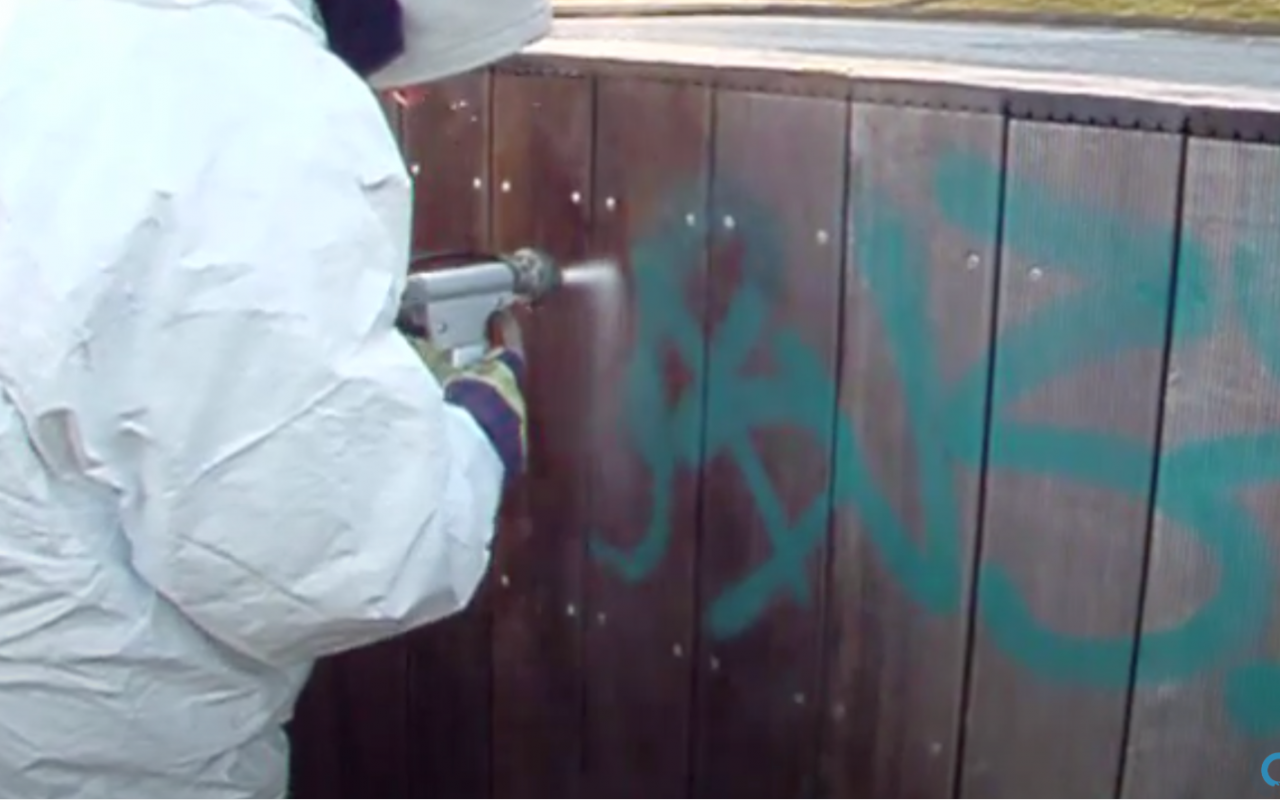
Graffiti removal is a specialist surface cleaning service for removing graffiti, spray-painted lettering, drawings and other unwanted paint marks from a wide range of indoor and outdoor surfaces. The appropriate cleaning technology is always selected according to the material, condition and sensitivity of the underlying surface, as well as the type of graffiti.
Depending on the surface and contamination, graffiti can be removed using specialist solvent-based cleaning, dry ice blasting, abrasive blasting or laser cleaning. Different methods may be appropriate for stone, brick, concrete, metal, glass, plastic or heritage surfaces, which makes careful technology selection essential.
The objective of graffiti removal is not simply to make the paint disappear, but to ensure that the cleaning process is controlled and adapted to the underlying surface. For porous, fragile or valuable surfaces, a prior assessment is particularly important to determine the most appropriate cleaning method.
The work is always adapted to the conditions at the site. We remove graffiti from façades, walls, statues, heritage surfaces, public spaces and a wide range of institutional, industrial and commercial environments. The service is available throughout Budapest and across Hungary.
Which surfaces do we remove graffiti from?
-
Graffiti removal from façades
-
Graffiti removal from stone surfaces
-
Graffiti removal from brick surfaces
-
Graffiti removal from concrete surfaces
-
Graffiti removal from metal surfaces
-
Graffiti removal from glass surfaces
-
Graffiti removal from plastic surfaces
-
Graffiti removal from rendered walls
-
Graffiti removal from statues and public-space elements
-
Cleaning of heritage surfaces, subject to prior assessment
-
Graffiti removal from complex or hard-to-reach surfaces
Which technologies do we use?
-
Specialist solvent-based graffiti removal
-
Dry ice graffiti removal
-
Abrasive blasting
-
Laser graffiti removal
-
Manual and mechanical cleaning methods
-
Specialist cleaning solutions adapted to the surface
-
A combination of several technologies where required
Where do we provide graffiti removal?
-
Office buildings
-
Industrial halls
-
Factories
-
Printing plants
-
Cold-storage facilities
-
Listed and heritage buildings
-
Statues and public-space elements
-
Churches
-
Apartment buildings
-
Hotels and guesthouses
-
Commercial kitchens, bakeries and pastry shops
-
Restaurants, cafés and hospitality venues
-
Sports facilities and gyms
-
Swimming pools
-
Museums and galleries
-
Theatres, cultural institutions and event centres
-
Shopping centres
-
Public transport vehicles
-
Warehouses and logistics centres
-
Schools, universities and educational facilities
-
Public and communal spaces
-
Public administration buildings
-
Railway stations and airports
-
Other industrial, institutional and facility-management environments
What types of contamination do we remove?
-
Graffiti
-
Wall markings
-
Spray-painted lettering
-
Unwanted paint marks
-
Marker and paint-pen markings
-
Paint that has penetrated more deeply into the surface, subject to prior assessment
Why do we recommend professional graffiti removal?
-
We use several different graffiti removal technologies
-
The method is adapted to the material and condition of the underlying surface
-
We work on stone, brick, concrete, metal, glass and rendered surfaces
-
Heritage and more sensitive surfaces are assessed in advance
-
Suitable for both indoor and outdoor surfaces
-
Can be carried out in industrial, institutional, commercial and public environments
-
We aim to protect the underlying surface throughout the cleaning process
When is graffiti removal recommended?
-
when graffiti appears on a façade, wall, gate or cladding
-
for cleaning the external surfaces of apartment buildings, office buildings and institutions
-
to restore the appearance of retail premises, hospitality venues and public spaces
-
when paint marks cannot be removed effectively with conventional cleaning
-
when a fast, targeted and surface-specific intervention is required
-
when graffiti is affecting the appearance of a building, business premises or public space
Frequently Asked Questions
What determines whether graffiti can be completely removed?
The result depends on the material, porosity and condition of the underlying surface, the type of paint used for the graffiti, and how long the graffiti has been present. Paint is generally easier to remove from smooth, non-porous surfaces, while on porous stone, brick or rendered surfaces it may penetrate more deeply into the material.
Why is graffiti more difficult to remove from porous surfaces?
On porous surfaces, the paint may not remain only on the surface but can penetrate into the structure of the material. These cases require a more detailed assessment and careful technology selection to achieve effective cleaning while also protecting the underlying surface.
Is it worth removing graffiti quickly?
Yes. In general, the sooner graffiti is removed, the better. Fresh graffiti can often be easier to treat, while older paint may become more strongly embedded in the surface, particularly outdoors where it has been exposed to sunlight, rain or freezing temperatures.
Can traces of graffiti remain after cleaning?
In some cases, yes. On highly porous, damaged, aged or previously treated surfaces, a faint shadow or discolouration may remain even after the graffiti itself has been removed. A site assessment and, where appropriate, a test clean can help determine this in advance.
Is there a difference between removing fresh and old graffiti?
Yes. Fresh graffiti is often faster and easier to remove because the paint has had less time to bond with or penetrate the surface. With older graffiti, the paint may have penetrated more deeply, been affected by weathering, or show traces of previous unsuccessful cleaning attempts.
Can graffiti removal damage the underlying surface?
Using an inappropriate cleaning technology can damage the surface, which is why the method must always be adapted to the specific material. Different techniques may be appropriate for metal, glass, stone, brick, concrete or heritage surfaces. The aim is to remove the graffiti effectively while protecting the underlying surface as far as possible.
Can graffiti be removed from heritage surfaces?
Graffiti removal from heritage or sensitive surfaces requires prior assessment. The cleaning technology is selected according to the material, condition and significance of the surface, as well as the applicable technical requirements.
When is laser or dry ice graffiti removal recommended?
Laser cleaning or dry ice blasting may be advantageous when targeted and controlled cleaning is particularly important, when the underlying surface is more sensitive, or when conventional solvent-based cleaning does not provide a satisfactory result. The appropriate technology is always selected according to the surface and contamination.
Choosing the right graffiti removal technology can result in significant time and cost savings.
For more than 35 years, we have been helping our clients select the most effective surface cleaning and specialist cleaning solutions throughout Budapest and across Hungary.
Videos
We will respond to your request for a quote within 24 hours, and to your call immediately!